Probate
Finding Official Property Records: Where to Start and What to Ask
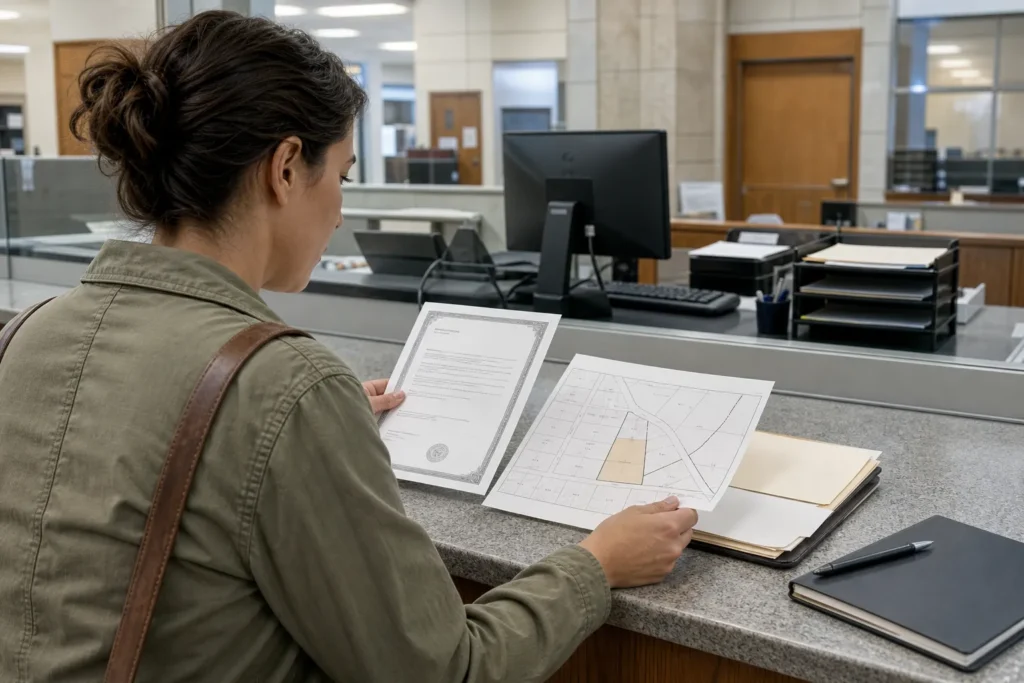
This is general U.S. property-records education, not legal advice. Property-record systems, office names, fees, and online availability vary by state, county, and sometimes city. For legal decisions (inheritance, probate, selling, disputes), confirm requirements with the local recording office and a qualified professional in the property’s jurisdiction.
Start with the official recording office for the county (or local jurisdiction) where the property sits. That’s where deeds, mortgages, releases, and many liens are recorded, and it’s the best place to confirm ownership and encumbrances. [1]
Use property tax and assessor sites as helpful context, but don’t treat them as definitive proof of ownership or liens. For verifying ownership and encumbrances, courthouse real property records are the key source. [1]
Step 1: Identify the right office (and don’t stop at the tax site)
If you’re trying to answer “Who owns this property right now?” or “Are there liens or mortgages?” you want the office that records real estate documents. Depending on the area, that office may be called the county recorder, recorder of deeds, registry of deeds, clerk, or a similar courthouse recording department. [1]
A tax assessor or property appraiser site can be useful to find a parcel number and mailing address. But tax assessment records are maintained separately and aren’t the authoritative chain of title for legal purposes. When you need to verify ownership and encumbrances, focus on the recorded real property records. [1]
- What county (and sometimes city) is the property physically located in? (Records are usually filed where the land is.)
- What is the office name for recorded documents there (recorder of deeds, clerk/recorder, registry of deeds, etc.)?
- Do you have the parcel number, street address, and at least one owner name spelling to start a search?
Step 2: Choose your search method: online first, then in person if anything is unclear
Many jurisdictions offer online index searches. Start there to pull basic information: deed references, recording dates, and the names used in transfers. But treat online results as a first pass, not the finish line. [2]
If your online search seems incomplete, missing older history, or confusing (for example, you see a deed reference but can’t open the image, or the index skips years), plan to visit the courthouse in person. When online records are missing or unclear, an in-person courthouse search may be necessary to see complete recorded documents. [2]
- If I search by address, does it return a parcel match, or do I need the parcel number?
- Can I search by owner name (grantor/grantee), and does the index handle name variations?
- Do the online results show document images, or only index entries?
- If images are missing, can I view the documents on-site at the courthouse?
Step 3: Request the records that answer real questions (not just a “property card”)
When you contact the recording office (or when you’re at the public terminals), be specific about what you need: the last recorded deed, the prior deed(s) that show how the current owner got title, and any mortgages and releases. [1]
If you’re an heir or you suspect the property is held in a trust or entity, ask for all documents affecting title for the last several years under every relevant name. Recorded documents can be indexed under individuals, trusts, LLCs, or estates. [1]
- Please provide the most recent recorded deed and the recording reference (book/page or instrument number).
- Please show the prior deed referenced by the current deed (so I can follow the chain).
- Are there recorded mortgages or deeds of trust? If so, can I get the recorded document and any recorded releases/satisfactions?
- Are there recorded liens or judgments affecting the property? (If yes, what are the recording references?)
- Can I obtain a certified copy of the deed (if I need it for court, probate, or a lender)?
Step 4: Use a title report when you need a consolidated picture (and know what it typically includes)
If you want one package that pulls key details together, consider ordering a title report through a title company or another method available in the jurisdiction. A title report typically compiles ownership, recorded encumbrances, and legal description details in one place. [1]
As a practical matter, when you request a title report (or when you review one), look for: the current owner (including whether ownership is in an entity), liens and judgments (including tax-related items), the full legal description, purchase history with deed references, and mortgage details such as lender, amounts, and dates. [1]
- Does the report list the current owner exactly as shown on the last recorded deed (including middle initials, suffixes, trust names, or LLC endings)?
- Does it include liens and judgments (not just open mortgages)?
- Does it show the full legal description (not only the street address)?
- Does it cite the deed recording reference and prior transfer reference?
- Does it list mortgage lender, recording dates, and any releases/satisfactions?
Step 5: The exact questions that surface common record problems (especially for heirs)
Recorded-property research is often about spotting mismatches early: a name spelled differently across documents, a missing release, or a gap in transfers. Use concrete questions that force clarity. [1]
If you’re dealing with an estate, remember that your next step may depend on state probate rules, which this guide can’t determine. Still, official recorded documents can help you and your professionals understand what’s currently of record and what’s missing. [1]
- Is the owner name on the tax bill the same as the owner name on the recorded deed? If not, what recorded document explains the difference?
- Do recorded documents show the property held individually, jointly, in a trust, or in an entity?
- Is there a recorded mortgage without a recorded release/satisfaction? If yes, what does the recording office show as the latest related document?
- Are there recorded liens or judgments? If yes, what documents created them and are there any recorded releases?
- Does the legal description match across the deed and mortgage documents? If it differs, which document controls in the recorder’s index?
Common questions
Is the property tax website enough to prove ownership?
Usually no. Tax/assessment records can help you find parcel details, but they are maintained separately and aren’t the authoritative source for verifying ownership, liens, and other encumbrances. For verification, you should rely on courthouse real property records (the official recorded documents). [1]
If online records show an index entry but no document image, what should I do?
Treat that as a sign to follow up. If online records are missing, incomplete, or unclear, an in-person courthouse visit may be necessary to view the actual recorded documents and confirm what’s on record. [2]
What should a title report help me see quickly?
A title report typically consolidates key legal details such as the current owner (including entity ownership), recorded liens and judgments, the full legal description, purchase history with deed references, and mortgage details including lender, amounts, and dates. [1]
What’s the fastest way to avoid going in circles when calling the recorder’s office?
Call with identifiers and targeted requests: parcel number, property address, and the full name(s) you think might be on title. Ask how to search by owner name versus parcel, and request the most recent deed plus the prior deed it references, along with any recorded mortgages, releases, liens, or judgments tied to the parcel. [1]
Sources and further reading
- 5.1.18 Locating Taxpayers and their Assets | Internal Revenue Service
- 5.15.1 Financial Analysis Handbook | Internal Revenue Service
General information only, not legal, tax, or financial advice. Rules and procedures depend on the jurisdiction and circumstances. Consult an appropriately licensed professional before acting.